
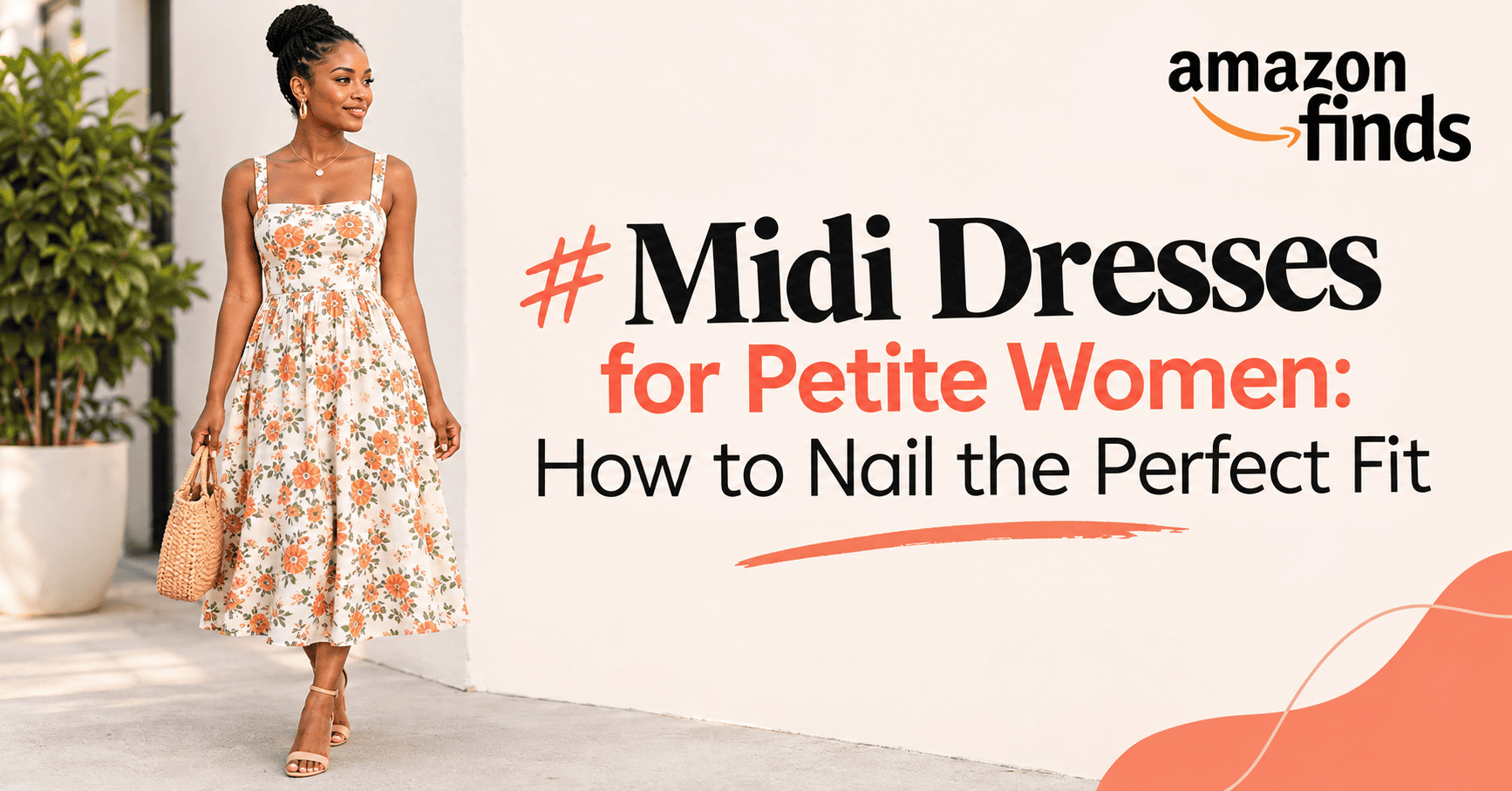
If you’re petite, a midi dress can either make you look longer and leaner or swallow you whole, and the difference almost always comes down to where the hem sits and how the waist is defined. The safest length for most petite frames falls right at or just below the calf, never at the widest part of the leg. Pair that with a defined waist, and a midi dress becomes one of the most flattering pieces a petite woman can own.

I’m Swabra Bridges, and petite style is what I do every single day, on Instagram, on YouTube, and on my blog, Simply Elegant Africana. Midi dresses used to be the one category I avoided because so many of them cut me off at the widest part of my calf and made me look shorter than I am. Once I figured out what to actually look for, midi dresses became one of my most-worn pieces, spring through fall. Here’s exactly what I’ve learned.
Why Do Midi Dresses Look Wrong on So Many Petite Women?
The problem is rarely the dress itself; it’s the hemline hitting at the wrong point on a shorter frame. On a taller woman, a midi dress that falls mid-calf reads as elegant and intentional. On a petite woman, that same length can visually cut the legs in half, which makes the whole body look shorter and boxier.
The fix is paying attention to where the hem lands on your specific height, not just trusting the size label. A midi dress that’s marketed as “midi” on a 5’9″ model can behave like a maxi on a woman who’s 5’2″, and that changes everything about how it wears.
A midi dress works for petite women when the hem sits at the leg’s narrowest point, not the widest.
What Silhouette Actually Flatters a Petite Frame?
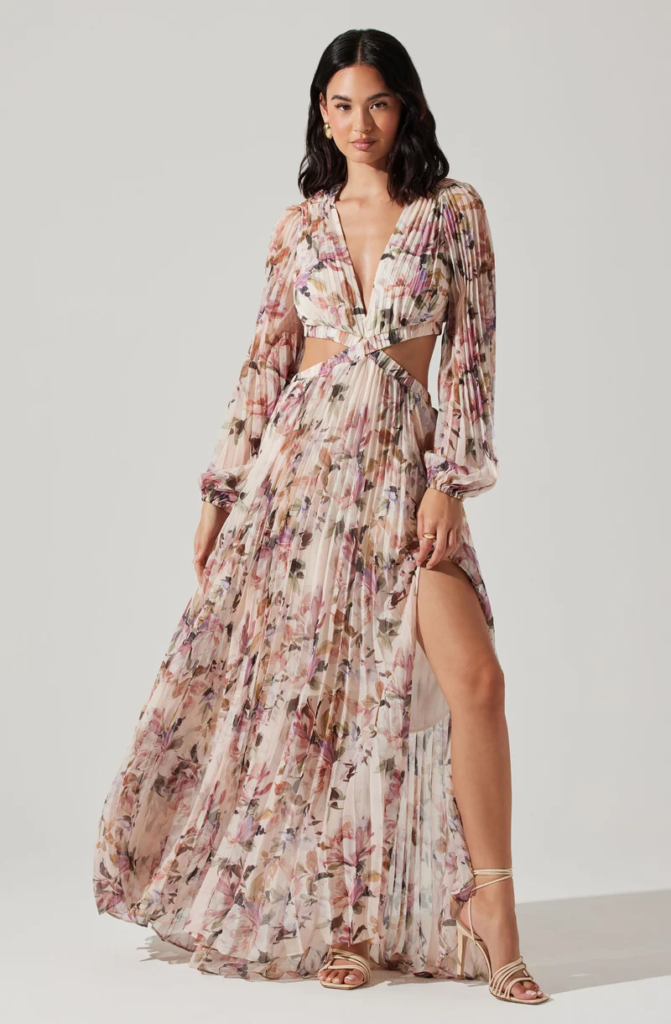
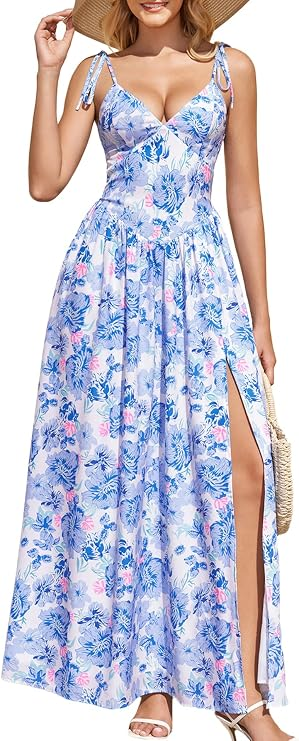
An A-line silhouette is the one I reach for most often, because it nips in at the waist and skims out over the hips instead of clinging or boxing you in. GRACE KARIN’s square-neck A-line sundress, for example, is built exactly this way: high waist, A-line cut, and a hemline you can actually control depending on how you style it.
A few structural details make the biggest difference on a petite frame:
- A defined waistline, smocked, elastic, or belted, so the dress doesn’t hang straight from the shoulders and erase your shape
- A V-neck or square neck, both elongate the upper body, which matters more the shorter you are
- Adjustable straps, so the bodice sits correctly instead of gapping or pulling
- Side slits or asymmetrical hems, these break up the visual line of the dress and add movement without adding bulk
I look for these same details across nearly every dress I recommend, whether it’s a sundress, a maxi, or a midi, the rules of proportion don’t change with the length.
How Should a Midi Dress Fit at the Waist?
The waist is where a midi dress earns its place in a petite wardrobe or loses it completely. If the waist is loose or undefined, the fabric just hangs, and on a shorter frame that reads as “wearing a sack” rather than “wearing a dress.”
Look for a smocked waist or an elastic waist that actually pulls in, not just a straight seam. Dresses with a “mid waist” or “high waist” style tag, like several of the GRACE KARIN pieces I’ve tried, do this well because the shaping happens before the fabric flows out into the skirt.
Here’s a quick way to check a midi dress before you buy it:
| What to check | Why it matters for petite frames |
| Waist definition | Creates a visible waistline instead of a straight drop |
| Hem placement | Should land at the narrowest part of the calf or ankle |
| Neckline shape | V-neck or square neck elongates the torso |
| Fabric weight | Lightweight fabric drapes instead of adding bulk |
| Strap adjustability | Lets you correct bodice length on a shorter torso |
A midi dress with a defined, smocked, or elastic waist will almost always outperform a straight-cut midi on a petite body.
What Fabric and Print Work Best for Petite Women?
Heavy or stiff fabric adds visual bulk, which is the opposite of what a petite frame needs. I look for soft, lightweight fabric with some stretch, polyester-viscose or polyester-spandex blends move with the body instead of standing away from it, and they photograph better too.
Print matters just as much as fabric. A smaller, more delicate floral print reads as more proportional on a petite frame than an oversized bold print, which can end up wearing the dress instead of the other way around. That said, I don’t avoid florals, I just choose the scale carefully. Florals in orange, blue-and-white, or soft pastel tones are some of the prints I come back to most for spring and summer.
A closed or open back is a styling choice rather than a fit issue, but a smocked or open back with straps does help the dress hold its shape at the shoulders, which matters when you’re petite and dealing with excess fabric at the top of a dress.
How Do I Style a Midi Dress If I’m Petite?
Styling is where you can push the proportions in your favor, even if the dress itself is already a good length. My go-to formula is simple:
- Add heels or wedges. A slight heel lifts the hemline visually and elongates the leg line, which is the single biggest lever you have with a midi dress.
- Cinch the waist further with a thin belt if the dress allows it, this sharpens the waistline even more than the built-in smocking.
- Keep accessories delicate. Oversized bags or chunky jewelry can overwhelm a petite frame the same way an oversized print does.
- Match shoe color to skin tone or dress color to avoid a visual break at the ankle, which shortens the leg line.
- Try a side slit or asymmetrical hem when you want the flowy look of a midi without the risk of it visually cutting you off.
I use this exact formula whether I’m styling a midi dress for a daytime outing or a vacation dinner, the principles hold across occasions.
Heels, a cinched waist, and delicate accessories are the fastest way to make any midi dress read as intentional on a petite frame.
How Do I Know My Size in a Midi Dress?
Sizing is where a lot of petite shoppers get tripped up, because most brands size for average or taller height, not petite proportions. I always check the brand’s own size chart before ordering, not just the general Amazon size guide, because the two don’t always match.
Annebouti’s ruched maxi dress is a good example of a brand that gives real, useful sizing detail: their guide notes the model is 5’7″, 120 lbs, with a 34B bra, wearing a size Small, and that it fits her perfectly. That single sentence tells you more about how the dress will actually sit on your body than a generic size chart ever could, because you can compare your own measurements against a real person instead of guessing.
When a brand doesn’t give you that kind of reference point, I look at three things before I order:
- Bust measurement, taken with the bra you’d actually wear with the dress
- Waist style, whether it’s elastic, smocked, or fixed, since stretch fabric gives you more room to work with
- Item length, described as “maxi,” “long,” or with an actual measurement, so you know roughly where the hem will land on your height
If a dress runs long on the model, it will run even longer on a petite frame, so I usually plan to hem it or style it with heels rather than assuming it will land mid-calf the way it’s pictured.
Always compare your measurements to the brand’s own size chart, not a generic one, and note the model’s height so you can judge how the length will actually work on you.
Which Occasions Work Best for a Midi Dress?
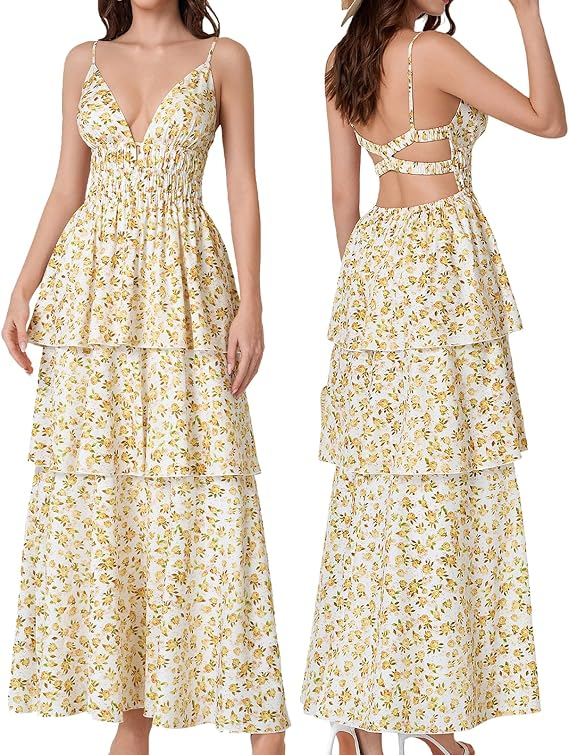
Midi dresses are some of the most versatile pieces in my closet precisely because they move between casual and dressy so easily. A floral A-line midi with sandals and a straw bag works for daytime, beach, brunch, or a casual outing. Swap the sandals for heels and add jewelry, and the same dress works for a dinner date, a wedding guest look, or a resort evening.
This is part of why I keep coming back to midi-length pieces in my Spring & Summer Dresses collection and my vacation edits, one dress, multiple outfits, without needing to overhaul your wardrobe for every occasion.
What Mistakes Do Petite Women Make When Buying Midi Dresses?
The biggest mistake I see, and one I made myself for years, is buying a midi dress based on how it looks on the model photo without checking where the hem sits relative to your own height. A dress that photographs as elegant and flowing on someone 5’8″ can look like it’s swallowing a 5’2″ frame the moment you put it on.
The second mistake is skipping the waist detail entirely. A straight-cut midi dress with no shaping is one of the least forgiving styles for a petite body, because there’s nothing to break up the fabric and create a waistline. I always scan the product description for words like “smocked,” “elastic waist,” or “belted” before I even look at the print or color.
The third mistake is treating every midi dress like it needs to be hemmed shorter. Sometimes the better fix isn’t altering the dress at all, it’s simply adding a heel, which lifts the whole silhouette and changes how the hemline reads without touching the fabric. I save actual hemming for dresses I plan to wear on repeat, and lean on heels or wedges for everything else.
Checking hem placement against your own height, prioritizing waist shaping, and reaching for heels before scissors will save you from most petite midi-dress mistakes.
Key Takeaways
- A midi dress flatters petite women when the hem hits the narrowest point of the calf, not the widest.
- An A-line silhouette with a smocked or elastic waist creates shape instead of hiding it.
- Lightweight, stretchy fabric and smaller-scale florals reduce visual bulk on a petite frame.
- Heels, a cinched waist, and delicate accessories elongate the leg line without altering the dress itself.
- One well-chosen midi dress can move from casual daytime looks to dressy evening occasions with a simple accessory swap.
FAQ: Midi Dresses for Petite Women
- Does a midi dress make you look shorter if you’re petite?
It can, but only if the hem falls at the widest part of your calf. Choosing a hem that sits above that point, or adding heels, prevents the “cut off” look that makes petite frames appear shorter. - What neckline is most flattering on a midi dress for a petite woman?
V-neck and square neck both elongate the upper body, which is especially useful for petite women since it balances out the shorter overall frame. - Can petite women wear A-line midi dresses?
Yes, A-line is actually one of the best silhouettes for petite women because it defines the waist and then flows out gently, rather than clinging or hanging straight. - What fabric should I avoid in a midi dress if I’m petite?
Stiff, heavy fabrics add bulk and stand away from the body, which overwhelms a petite frame. Lightweight polyester-viscose or polyester-spandex blends drape better and move with you. - How do I make a midi dress look dressier for evening?
Swap flat sandals for heels, add a thin belt to sharpen the waist, and layer in delicate jewelry. The same dress can go from a casual daytime look to an evening-appropriate outfit with those small changes.
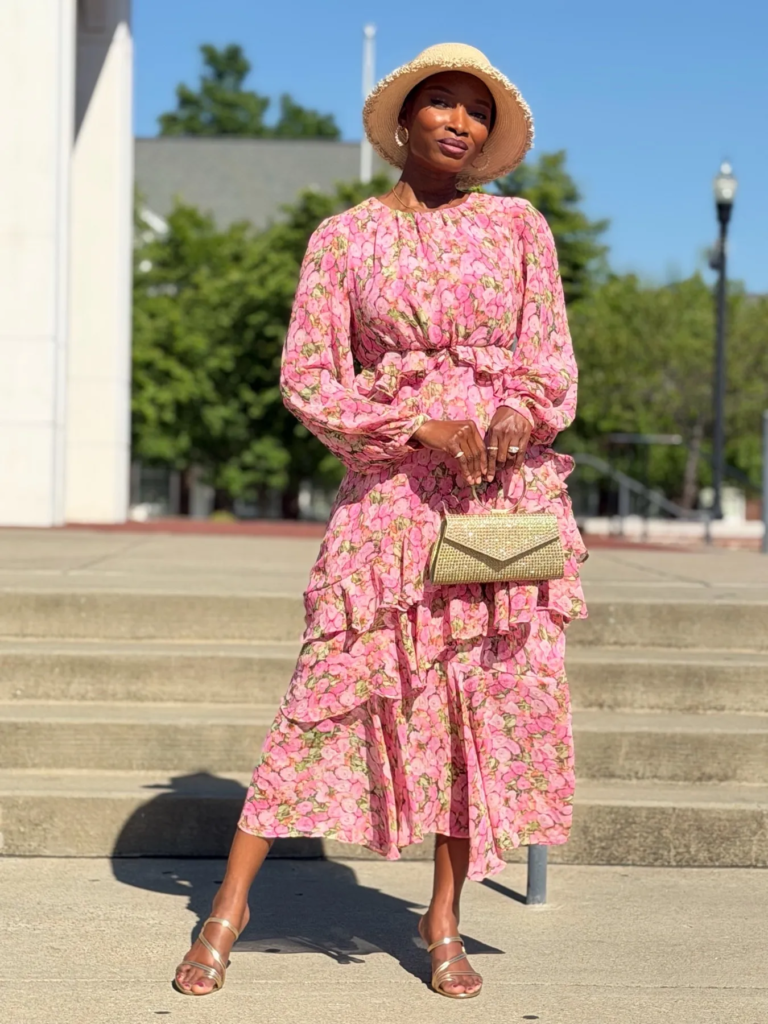
Swabra Bridges is a petite fashion content creator and blogger based in Nashville, TN, and the founder of Simply Elegant Africana. She has been styling and writing about fashion since she was 14 and focuses on helping petite women shop and dress with confidence. Follow her style guides on Instagram, Pinterest, and YouTube, or shop her curated picks on ShopLTK.